


In This Edition
Co-Investment Opportunities: [See LP-only section at the bottom]
Portfolio Updates: Defence deliveries, NHS deployments, new hardware shipping, and fresh rounds across the portfolio
Events: 🇩🇪 SuperReturn Venture, Berlin, 8–10 June
Market Lowdown: Deep tech adoption always needs a catalyst - and today, like before, it’s defence
GP Reflections Easter Special: The Marketplace in the Temple. On hype, meaning, and what venture capital is actually for
A reminder of what we are about
Silicon Roundabout Ventures is a SuperAngel Seed fund in the UK investing in European Deep Tech startups. It leverages their community of 15,000 entrepreneurs and engineers, through which the team previously attracted, selected and helped launch 33 Deep Tech and Big Data startups now valued at over £6 Billion.
The fund is backed by top-tier VC Molten Ventures (LSE:GROW) and exited founders, engineers and execs: including ex googlers, amazonians and from 4 unicorns.
Thanks for reading Silicon Roundabout Ventures Community! Subscribe for free to receive new posts and support my work.

📅 Upcoming Events and Community Updates
We will be attending Super Return Venture 8th-10th June 2026 in Berlin! If you’re going to be there, reach out soon as we’re thinking about our side events already…
➕ New Announcements
💥 Silicon Roundabout Ventures has just led the Seed round into Cellbricks Therapeutics, which has raised in total over €10M.
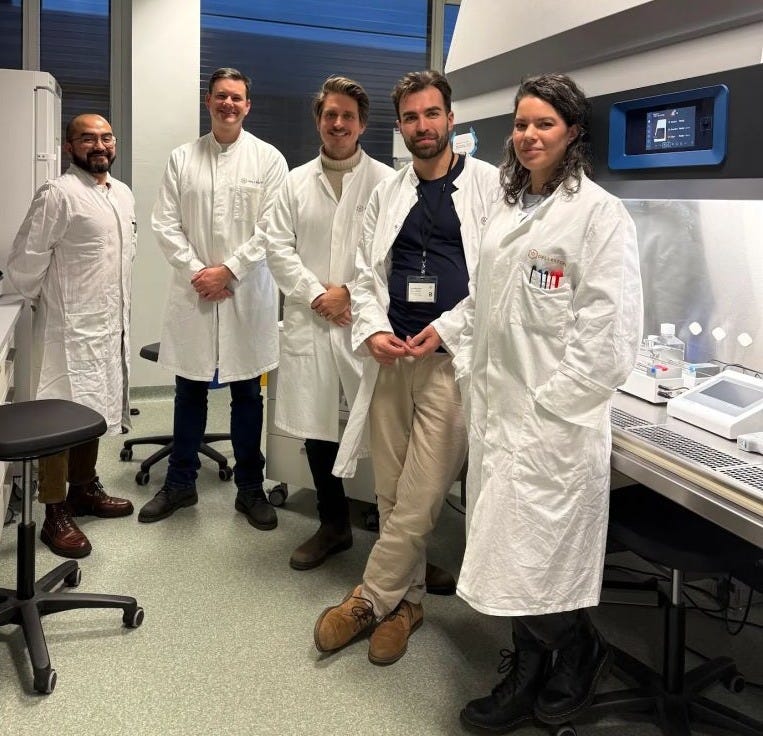
We are backing this INCREDIBLE team alongside SPRIND - Bundesagentur für Sprunginnovationen and ACT Venture Partners.
Let us introduce Cellbricks:
Printing living human organs and tissues. You can literally go to their HQ in Berlin and touch the bio fabricated tissue yourself. They can even send you a photo of a bio fabricated "baby hand" if you want proof of their capabilities.
They are the European answer to Aspect (who recently signed a $2.6bn deal with Novo Nordisk). They are moving tissue printing into clinical reality by cracking the vascularisation bottleneck. By developing a proprietary bio fabrication platform to produce complex tissue structures with functional blood vessels.
Here is why we backed them:
🔴 The team is the best of the best. Alexander Leutner started this journey after donating a kidney to his brother. He leads the company as Co-CEO alongside Dr. Simon MacKenzie. The executive team is rounded out by industry veterans Kattayoun (Kathy) Kordy, M.D. and Michael Kring.
🔴 They are launching preclinical animal studies for an adipose tissue implant programme. This provides biological alternatives to synthetic implants for breast reconstruction. Currently targeting a $60bn total market.
🔴 The long-term vision is 3D-bioprinted viable human organs. The team is ultimately pushing toward full liver replacement.
🔴 Made in Europe:They operate a dedicated headquarters and R&D hub in Berlin, actively expanding into Boston. Where they will be working out of The Engine at MIT.
This is the exact type of critical physical infrastructure we need to fund.
Welcome to the family! 🚀
Performance Snapshot
Note: We do not book non-priced rounds as markups.
Silicon Roundabout Ventures LP II
Stay tuned for updates :)
Silicon Roundabout Ventures LP
Vintage: 2023 / Investments: 21 (closed)
Key Deeptech Areas: Future of Computing, Energy, and Defence
Fund Size: £5M
GP’s Angel Portfolio
Vintage: 2020 / Investments: 17
TVPI: 2X / DPI: 0.1X
Highlight Companies: Ori.co, Aegieq.com, Kaizan.ai, Nanusens.com, rnwl.co.uk, Ecosync, Axiom.ai
Community “Virtual” Portfolio
Vintage: 2016 / Companies considered: 26
Method for selection: Silicon Roundabout community pitch winners until the beginning of the GP investment activity
Simulated TVPI: 6-6.9X
Deep Tech adoption always needs a catalyst
Normally it’s Defence. Today is no different.
We wrote in January that value is migrating back to the Physical Layer. In February we called it the shift from the Discovery Phase to the Execution and Sovereignty Phase. This month, the evidence is becoming undeniable: our deeptech bets continue to sign up real contracts and a thirst for sovereignty is often behind their clients’ interest.
Far from being a temporary hype, this pattern has consistently initiated large scale adoption for frontier technologies.
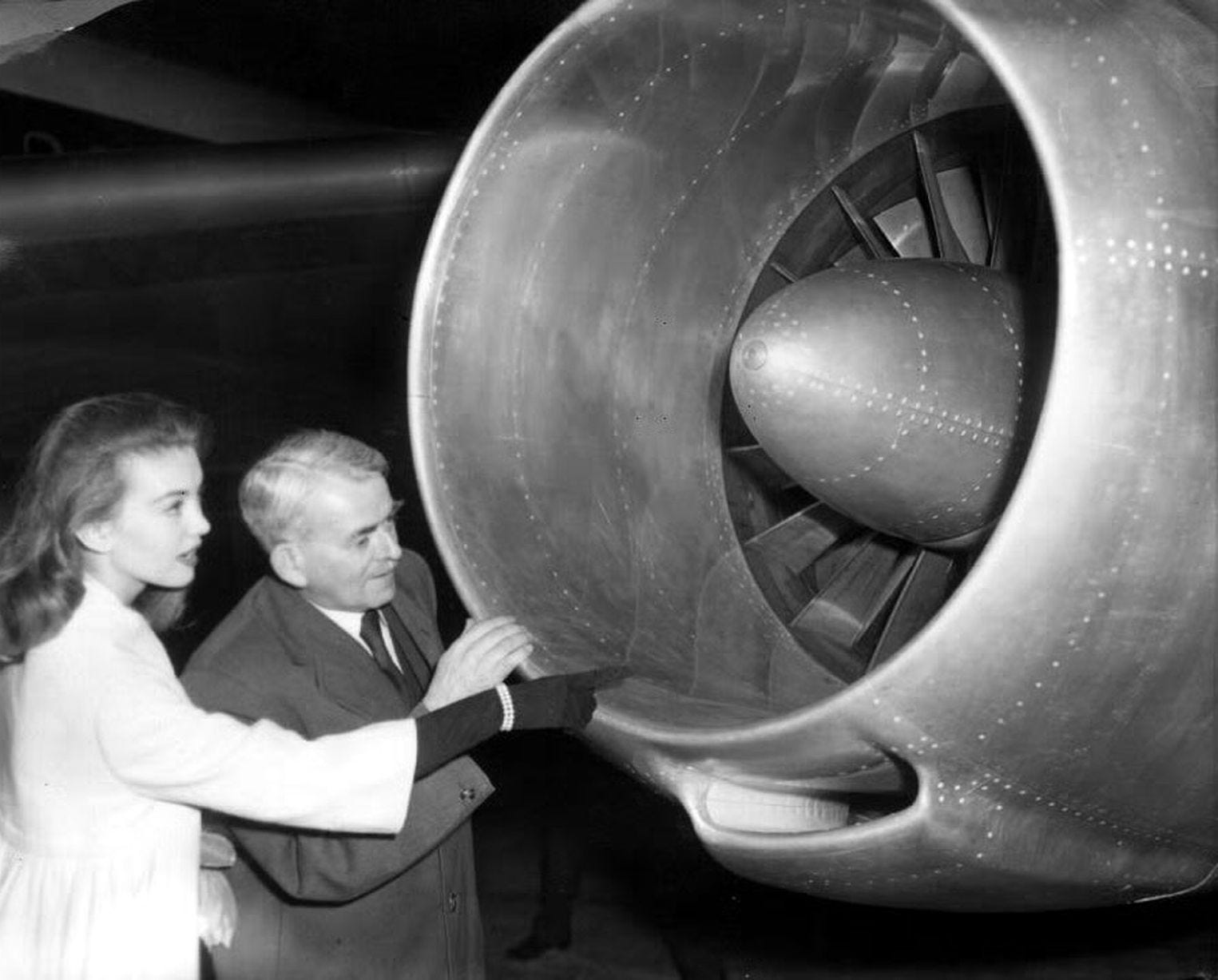
Take Aviation, for example, some of their biggest breakthroughs have often needed a military catapult to reach escape velocity. The jet engine is the perfect example. Sir Frank Whittle's design was rejected by the Air Ministry in 1929. It only became a reality when the war made it a sovereign priority. That defence funding subsidised the transition to the commercial flight era.
We saw the same pattern during the birth of Silicon Valley. Early transistors and the internet moved from academic and corporate R&D labs to global dominance because the space race and the Cold War acted as the trigger for large scale government grants and high-value customers.
Today, we are seeing similar patters, with the US DoD and DARPA-linked programmes seeking out startup innovation to fuel a revived American Imperialism 2.0, while European countries and NATO-bar-US allies are desperate to fund technological sovereignty. For true deeptech innovators and investors, the opportunity is there to catalyse the industrial base for future mass markets. Government grants and contracts provide the initial runway for commercial scale, while the renewed interest in ground-breaking technologies as opposed to digital tools that exploit earlier breakthroughs (e.g. SaaS and AI wrappers) at least for some investors and founders will likely lead to the creation of entire new categories of tech titans.
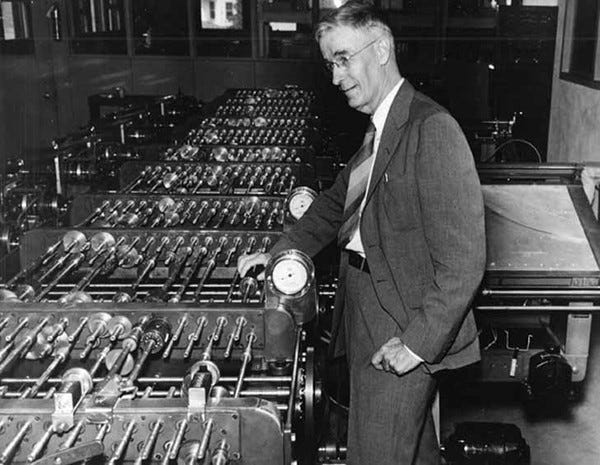
We see this reflected in our young but commercially growing portfolio: Still pitching, still demonstrating, but also delivering. To NATO armed forces, to NHS hospitals, to battery manufacturers, to data centres, to space missions.
The companies that moved early into hard problems are now the ones with contracts, products in the field, and real customers.
While there is no magic hack to translate the ease of ARR hockey sticks into deeptech commercial ramp-ups, we are finally starting to see the first early contracts turning into multi-million or even multi-tens-of-million sales.
Through these lenses, let’s dive into how the advanced technology landscape is evolving globally and locally across Europe.
Defence, delivered
Market Context: Counter-drone procurement is accelerating across NATO. The shift from evaluation to active delivery is happening in months, not years.
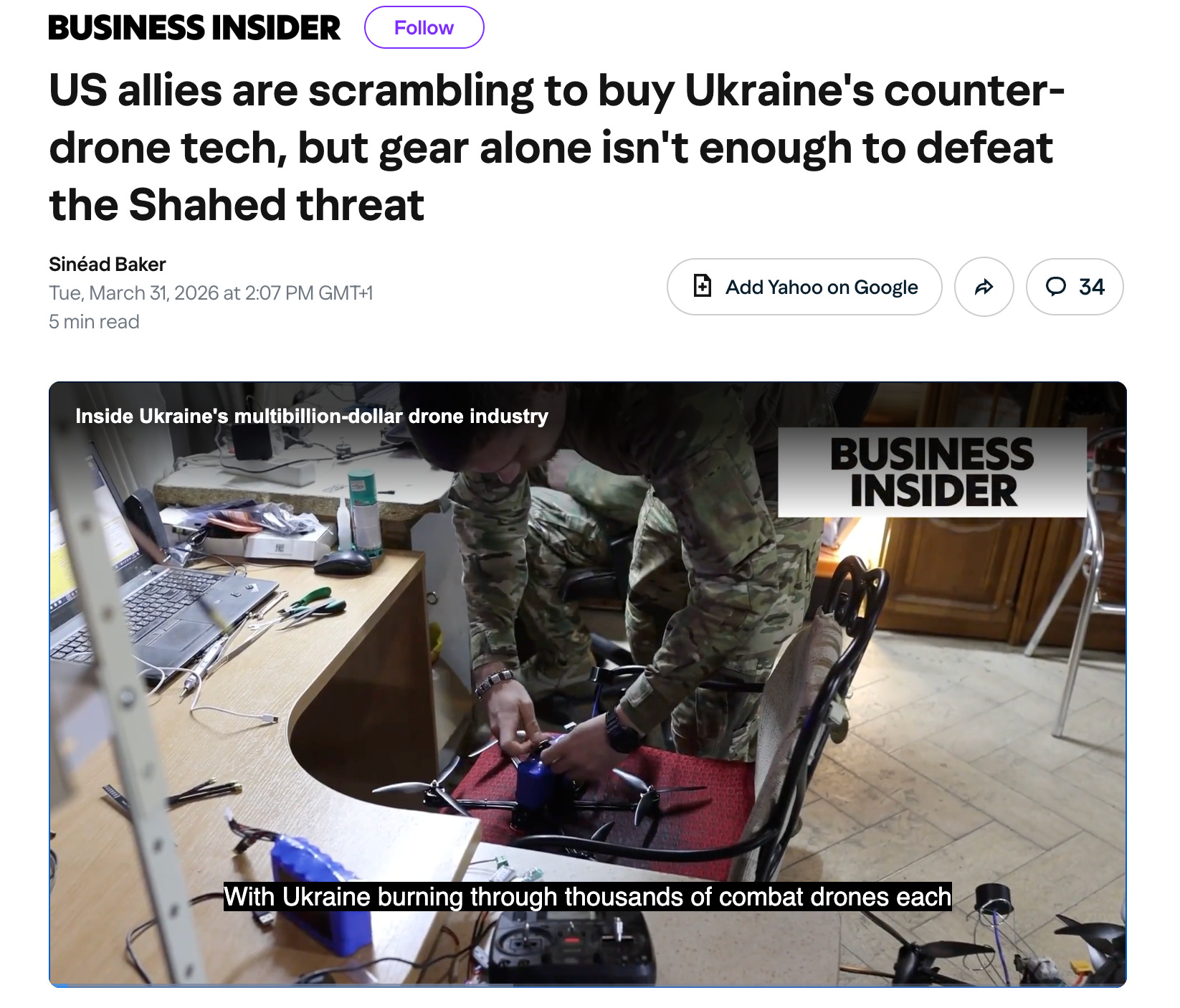
Portfolio Zoom: Origin Robotics started delivering BLAZE interceptor drones to Latvia, Estonia, and Belgium. This is the first NATO-codified autonomous interceptor drone in active delivery, equipped with a STANAG-compliant warhead module. The Belgium contract was signed during an official visit between Belgian Minister of Defence Theo Francken and Latvian Minister of Defence Andris Spruds.
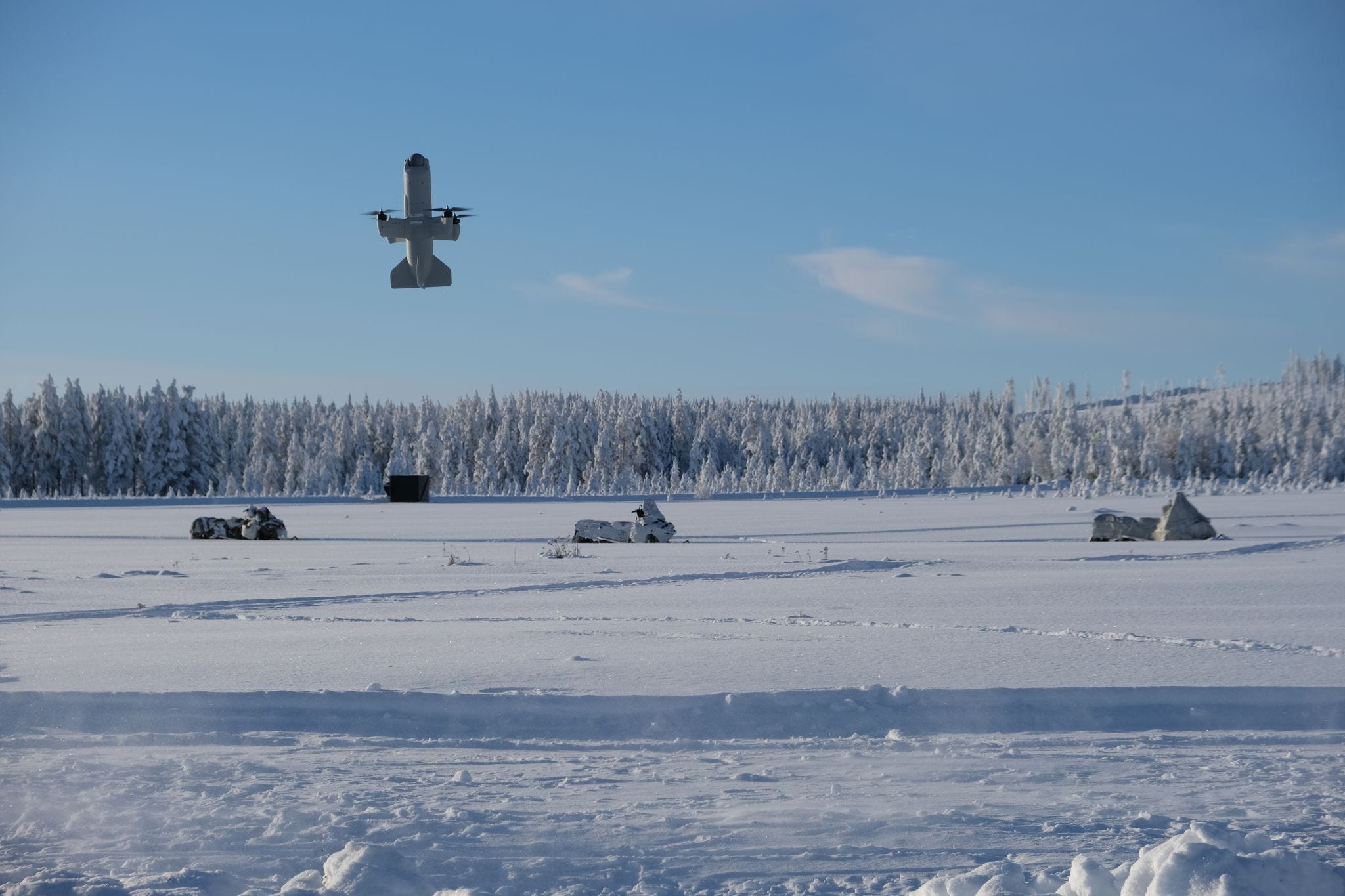
CEO Agris Kipurs went live on BBC News to discuss the economics of drone warfare and how autonomous interceptor drones are reshaping modern defence. The team also successfully deployed both BLAZE and BEAK in Arctic conditions at -25C during Griffin Tech Days 2026 in Rovajarvi. In his words:
“There’s no substitute for this kind of environment. Lab testing is necessary. Controlled trials are necessary. But real learning happens when hardware meets weather.”
They completed integration testing with Robin Radar Systems’ IRIS C-UAS radar, validating the full detection-to-intercept chain, and won the FSDI Latvia Innovation Award for the second consecutive year.
The recent attacks on Iran by US and Israeli forces (and the subsequent Iranian response) has now created a renewed need for “anti-drone” technologies like the ones that Origin developed in Ukraine when the founders started the company and, lately, delivered to Ukraine via their Latvian contracts. For new companies needing to fund heavy R&D, these unfortunate needs are a 21st catalyst that mirrors the ones that reshaped computing (transistor, internet), energy (nuclear power), and aerospace (jet engine) in the 20th century.
Diagnostics Deployed
Market Context: The MHRA’s AI Airlock programme and NHS Innovation Accelerator are creating structured pathways for AI-as-a-medical-device. The companies that engaged early with regulation are now the ones with deployed products.
Portfolio Zoom: Panakeia published the largest real-world, multi-site validation for AI-based molecular profiling to date in npj Digital Medicine: 3,576 patient samples across three independent healthcare institutions, definitive results for over 8 in 10 samples, 93.83% agreement with standard laboratory testing. In their words:
“Every week of waiting is a week stolen from treatment. PANProfiler ends this. Minutes instead of weeks for MSI/MMR results. Precision medicine accessible to every patient, in every hospital, not just those near specialist centres.”
CEO Dr Pahini was selected as a 2026 NHS Innovation Accelerator fellow. PANProfiler Colorectal (MSI/MMR) and PANProfiler Breast (ER, PR, HER2) are both UKCA-marked and deployed in NHS hospitals. Panakeia is also part of the MHRA’s AI Airlock programme (phase 2). They presented at LSI USA, Digital Health Rewired at NEC Birmingham, and BioTools Innovator East Coast.
We recently interviewed her to highlight her path from academia to VC-backed medtech startup founder:

Hardware is shipping
Market Context: European deeptech is moving from prototype to production. The companies doing it fastest are the ones with integrated supply chains and real customers, not the ones with the biggest rounds.
Portfolio Zoom: Greenjets delivered products to customers, significantly expanded facilities, increased production capacity, and opened a Munich office:
“This growth reflects the momentum across the business and the progress we are making as we scale our technology and operations.”
They brought in senior hires from Reaction Engines: Dr Kathryn Evans as Business Development Director and Pat Nagle as Head of Programmes. Hiring across engineering, ops and manufacturing: greenjets.com/careers
SCI Semiconductor showed working ICENI silicon at Embedded World 2026 and won Best-in-Show in the Microcontrollers category. They won government contracts and appointed Dipesh Patel as Chair of the Board. At QCon London and the Civil Service Innovation Conference, the message was clear: “We can’t deliver the next generation of tech innovation unless we fix memory security, now.” EU Cyber Resilience Act compliance is becoming a major conversation for them.
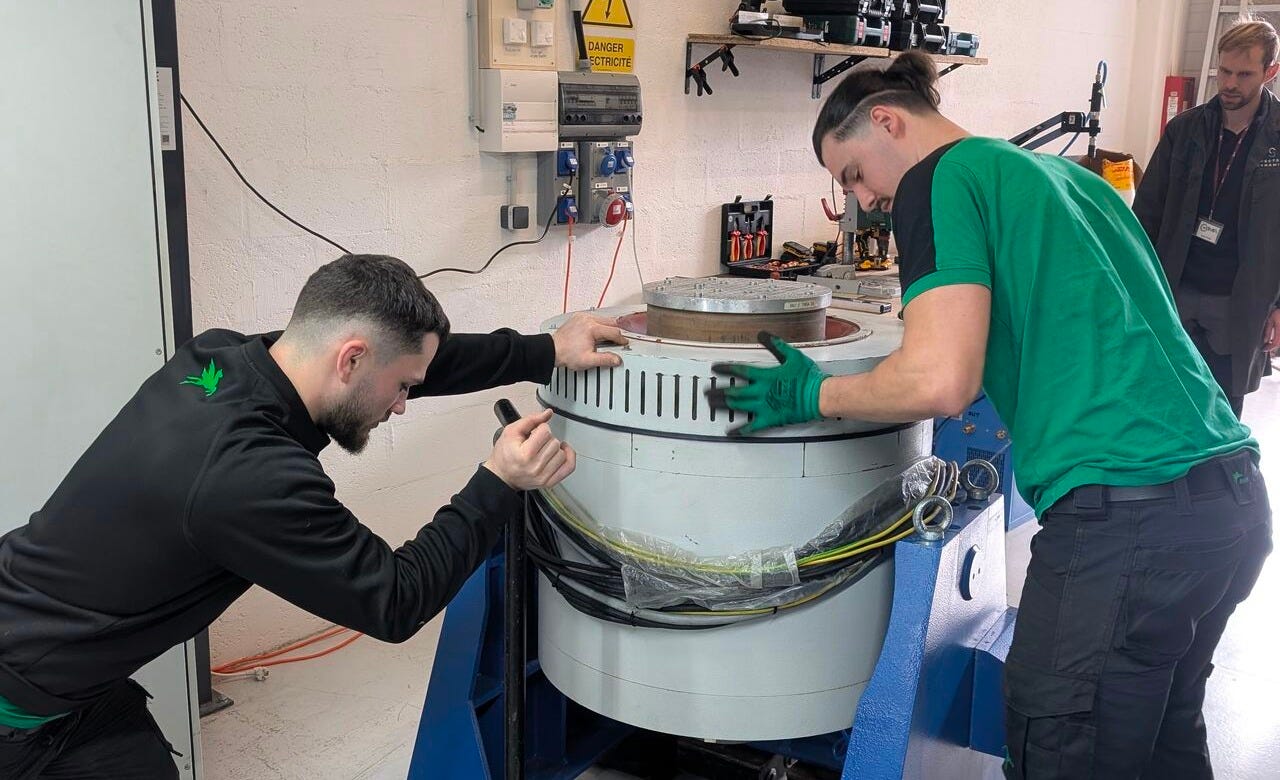
Gama installed a 20kN vibration shaker in-house, cutting weeks off test campaigns for their Astrobrake deorbiting units:
“No more waiting for external lab slots. No more shipping hardware across the country. Faster iterations, faster delivery of more reliable products.”
They are also partnering with Aerospacelab on the IPERLITE hyperspectral mission, providing Astrobrake for end-of-life deorbiting.
Infrastructure is being built
Market Context: The photonics and battery supply chains are being built right now, backed by EU Chips Act grants, Innovate UK contracts, and private capital following the public signal.
Portfolio Zoom: Ephos continues expanding Fab-2, backed by the 41.5M EUR EU Chips Act grant, manufacturing glass-based photonic circuits for AI data centres. Their CEO noted the convergence with Musk’s Terafab announcement:
“Vertical integration in the chip industry strikes back. Fast recursive loops for improving chip design are just too important in the era of AI agents.”
Finchetto partnered with Pilot Photonics for their world-first fully optical passive network switch, capable of reducing power by up to 20x and latency by up to 40x. Won Innovation Product of the Year at Data Centre World Awards. Secured Innovate UK funding for a commercial pilot. Appointed Dr Drew Nelson OBE to the board. Doubled the team. Their CEO wrote in The Engineer UK:
“We may have missed out on the semiconductor manufacturing race, but many of those ‘left behind’ 180nm fabs are exactly what next-gen photonics needs”
Anaphite raised £1.4M for a dedicated LFP dry coating programme (Innovate UK grant matched by World Fund and Elbow Beach). They had three sessions at the International Battery Seminar in Florida and presented at InterBattery Seoul. Tesla confirmed dry electrodes are now in Cybertruck and Model Y, with Cybercab and Semi coming this year. McKinsey estimates dry coating could save 2-3 EUR per kWh in Europe.
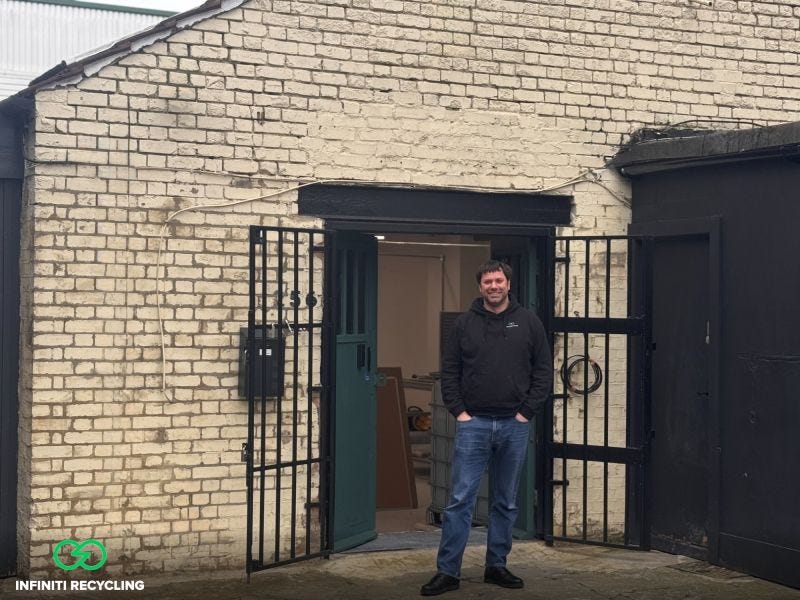
Infiniti Recycling completed the pre-seed that we had initiated as a solo-cheque backing the founder, with £1.4M coming from Sustainable Ventures, Ascension, and us (again) at Silicon Roundabout Ventures, alongside angels. 97% & 93% of the world’s LFP Cathode and Graphite Anode materials respectively are processed in China, even the material mined or recycled in Europe. Infiniti are building the alternative.
Scaling the quantum stack
Market Context: The UK’s £2 billion quantum package included £125 million for quantum networking. The state is backing the infrastructure layer, not just the research.
Portfolio Zoom: Nu Quantum’s Carmen was featured across the DSIT announcement, quoted by Innovate UK, NSSIF, and Amadeus Capital. She told UKRI: “Patterns in classical computing tell us that this need [for networking] has always been there, and it’s a valuable problem to solve”. John Jarman presented “Entanglement Networks for Datacentre-Scale Quantum Computing” at OFC Conference. Nu Quantum is a finalist for Employer of the Year at the Cambridge Science and Technology Awards.
Haiqu closed an $11M Seed, led by Primary Venture Partners with Toyota Ventures doubling down. They hired Antonio Mei (ex-Microsoft Quantum) as Lead Product Manager and published the most complex publicly documented Quantum Lattice Boltzmann fluid dynamics simulation on real hardware: 15-step nonlinear on IBM Heron. Beta live at haiqu.ai.
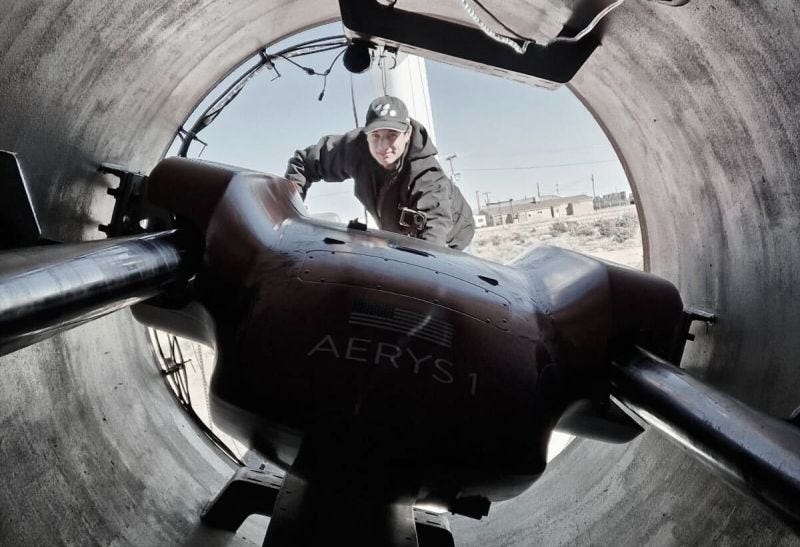
Swisspod set a new hyperloop speed record at 115 kph with AERYS 1 at their facility in Pueblo, Colorado. They celebrated their 7th anniversary:
“We started in Switzerland with the world’s only infinite hyperloop testing track. We broke the world record for the longest hyperloop mission. Then we crossed the ocean to the U.S., built the largest hyperloop infrastructure, and broke speed records there.”
GP Reflections - Easter Special Edition
The Marketplace in the Temple: A Post-Easter Reflection for the High-Growth Era
This Easter, I found myself looking at the venture capital ecosystem through a lens ground from two very different stones. On one side are the Catholic roots I grew up with in Italy before drifting from institutional religion. On the other are the Buddhist insights I developed during a difficult “dark night of the soul” in my 20s.
The reflection was triggered by an unusual weekend. I attended a choral evening service in London with my family and, thanks to one of my daughter’s night wake-ups, I also spent the pre-dawn hour in deep mindfulness meditation. This personal intersection collided with a series of recent articles in the Financial Times that have been circulating in my mind: “How we gave up on forgiveness”, which built upon earlier ones from the same author: “Where have all the virtuous role models gone?” and “The culture wars have flipped”.

These thoughts lead to a question that we, as both builders and investors, cannot afford to ignore:
What is the true value of our hard work and the capital we shift as a proxy for accumulated work-energy?
If we do not integrate this questioning into our daily operations, the inevitable result is a total loss of meaning.
Historically, societies rarely survive a deep loss of purpose combined with economic stagnation. The Western Roman Empire fell in circumstances uncomfortably similar to ours today. In the Middle Ages, popular anxiety was channeled by the Papacy into holy wars. The Enlightenment eventually decayed into a colonialist decadence that fuelled the collapse of the British, French, and Ottoman Empires across two world wars. When the “Why” of a civilisation vanishes, the “How” becomes increasingly desperate and violent.
The “Just” Trap
We are currently living in the “Steroid Era” of venture capital. We have become obsessed with the hype of the “billion” while losing the meaningfulness of the “enterprise.” This has birthed a rise in religious lip service. We see leaders talking about “values” while their actions prioritise the destruction of competitors and the total burnout of human talent for the sake of a 100x return.
The FT articles I mentioned above noted the irony in today’s Silicon Valley poster-child, Elon Musk. Despite not being himself religious and his public pictures as a “Devil’s Champion” with an upside-down cross, he now uses his platform X to lambast moral sinners. His primary life goal has seemingly shifted from reaching Mars to a combative defence of “biological women, the west, Donald Trump, England’s race rioters and (…) Christianity.” It is the ultimate irony: high-profile founders and VCs finding a renewed passion for defending the “traditional temple” while they are busy setting up currency exchange booths in the middle of the sanctuary.
In general, in the tech industry, we now speak about Artificial Intelligence with a messianic fervour (“AGI”). We act as if startups are just their capacity to “explode” their ARR or just their capacity to hit multi-billion-dollar valuations. We treat founders as if they are just their capacity for 80-hour workweeks. This reductionism leads to “Kingmaking”, where mega-funds with dubious performance records use massive cash piles to bribe the market ahead of Product-Market Fit (PMF). They force extreme valuations that ignore every fundamental rule of business, as this seems to be the only thing that ultimately matters. Instead of “build and they will come”, it seems the industry is now obsessed with “raise billions at gazillion scale and trillions will flow”.

While I have moved away from Christianity, I still remember the Gospel account of the temptation in the desert, where Satan says: “All this I will give you if you will bow down and worship me.” By reducing the genuine unleashing of human ingenuity –that creative potential to solve the world’s hardest problems– into a shallow cocktail of hype and hope for fast price-tag growth and returns, we are bowing to a master that cannot sustain us.
Building for the Future
The most successful long-term businesses, the ones that actually shift the needle for humanity, are those that refuse to bow to mere hype. There is a reason why companies built on over-hype like Theranos or WeWork ultimately collapsed, yet I am still typing this on an Apple computer, powered by TSMC-printed chips and sustained by a national energy grid incumbents. These are enterprises built on the financial hardness reality and the meaning of long-term visions.
In our industry, the “10X VCs” that actually justify the illiquidity and risk of this asset class compared to the Nasdaq are often not the mega-funds. They are the small, focused boutique teams that refuse to follow the hype or worship the dogma of the giants. Maybe without even realising it, they may just understand that honourable values and deep insight are not obstacles to growth; they are the only things that make growth worth having in the first place.
If we are going to use the language of “defending values,” we should start with the ones that are actually measurable in the long-term health of our civilisation:
Integrity over Hype: Building what works, not what sells for the next round.
Sustainability over Burnout: Creating businesses that can sustain the people who build them.
Humanity over Valuation: Recognising that capital is a tool for human progress, not an end in itself.
The marketplace has always been inside the temple. The question for us at Silicon Roundabout Ventures, and for you as our partners, is whether we are here to serve the spirit of the enterprise or if we are simply here to count the coins.
Are we still trying to reach Mars and build powerful machines to expand human horizons, or are we turning idols into gods and destroying the fabric of our civilisation as a byproduct?