Silicon Roundabout Ventures, July 2026 Bulletin
Our "Build in Public" LP update, with fresh fund highlights, community events, and deeptech market insights. Written by our AI. Edited by our humans.

In This Edition
Here is a TL;DR summary of this edition:
Deep Tech Demo Day: Investor Partner Applications are currently open. (link below)
Deep Tech Showcase (past): Silicon Roundabout Ventures’ internal showcase featured live technology demonstrations from portfolio companies.
Market Deep Dive: On Becoming The Standard in Deeptech: Portfolio companies are moving beyond standalone products to build foundational infrastructure layers across defense, space, quantum, and compute.
Space Communications: Archangel Lightworks successfully demonstrated LEO satellite-to-ground laser data transfer (TERRA-M) adhering to U.S. Space Development Agency standards.
Quantum Infrastructure:
Nu Quantum partnered with Atom Computing to build hardware-agnostic quantum networking layers and published research on fault-tolerant distributed QPU architectures.
Haiqu launched its HaiquOS Academic and Enterprise programs, compressing quantum circuit depth by 3x in joint fluid dynamics tests on IBM hardware.
Air Defence: France became the fourth European nation to adopt Origin Robotics’ BLAZE counter-drone system, alongside new integration MoUs with Alpine Eagle and EM&E Group.
Government Policy & Defense Contracts:
Hop Aero emerged from stealth, joined Y Combinator, and secured a U.S. Air Force contract for hypersonic cargo delivery.
SCI Semiconductor (CHERI chip architecture) and Finchetto (optical network switching) were highlighted as critical infrastructure under UK national cyber and AI hardware plans.
Swisspod applied for new U.S. Federal hyperloop grants, received a USPTO patent for supersonic electromagnetic propulsion, and unveiled its AERYS 2 prototype.
A reminder of what we are about
Silicon Roundabout Ventures is a First Cheque VC firm in the UK backing European Deeptech founders building infrastructure technology companies. It leverages its community of 15,000 entrepreneurs and engineers, through which the team sourced and backed 21 teams for its inception fund (2023-2025) that already generate over $100M in aggregated annual revenue.
The firm is backed by Molten Ventures (LSE:GROW), Cherry Ventures, and exited founders, engineers and execs: including ex googlers, amazonians and from 4 unicorns. Now investing from its 2nd fund.
Thanks for reading Silicon Roundabout Ventures Community! Subscribe for free to receive new posts and support my work.

📅 Upcoming Events and Community Updates
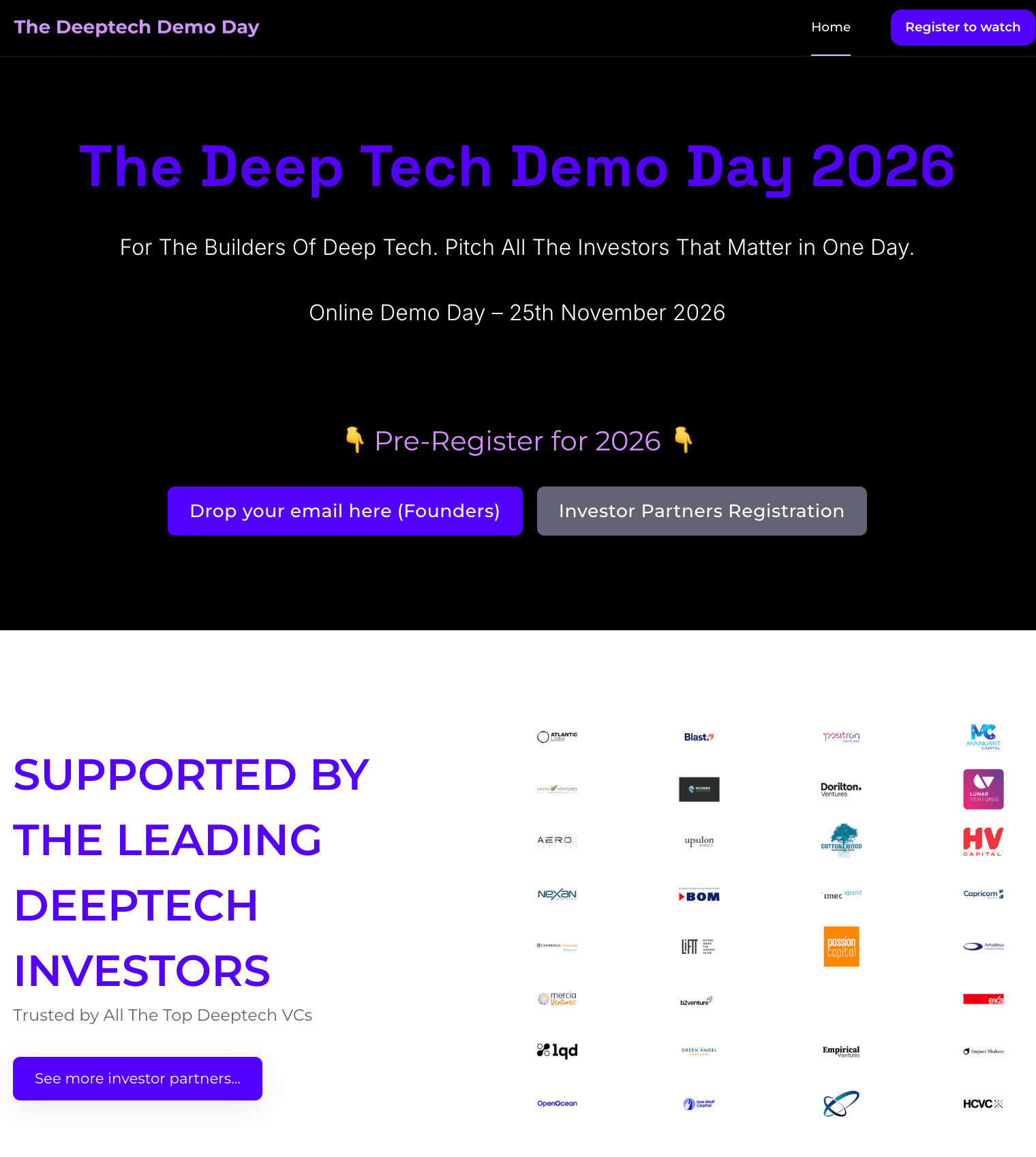
The Deep Tech Demo Day is our favourite event of the year! Every year, we end up backing applicants ourselves and having fellow deep tech demo day investors join us :)
The quality is insanely high.
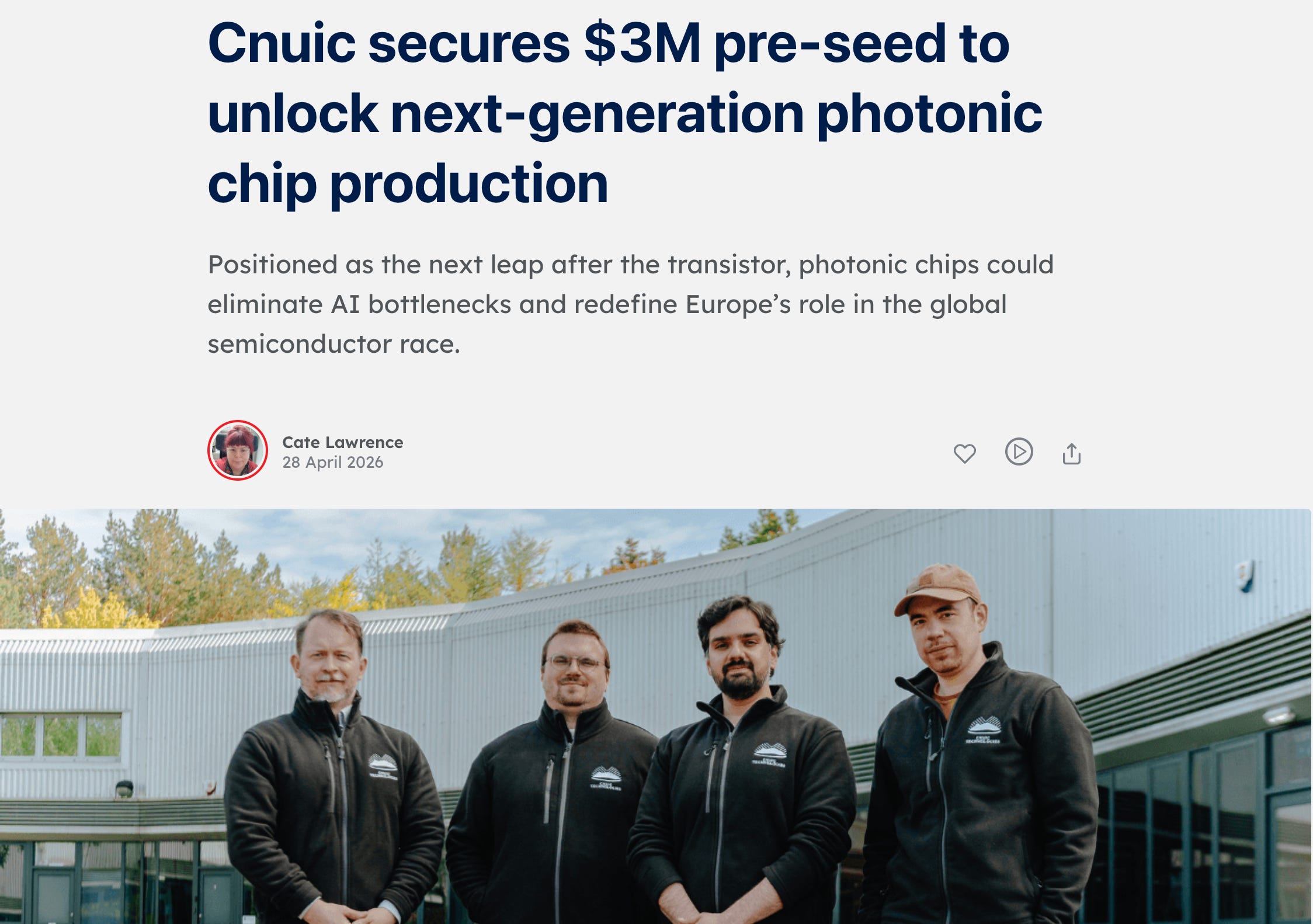
These guys got their round going through it — that we proudly backed!
This year we want to make it even bigger and have just opened the Investor Partner Applications. HERE.
The deal: you review and score a randomly assigned small batch of top Pre-Seed to Series A European deep tech decks in early October, and once the scores are in and averaged out, and the finals completed, you’ll be able to check and see look for matching companies across all the applicants.
And a shoutout to the legends who supported us last year, over 120 investors!!
➕ New Announcements
We have closed once again a portfolio up-round! With another Series A bringing home 5X for that investment and, given our concentrated strategy, a 20% uplift to our fund 1 value 💪
The company chose not to announce right now, but current LPs can read more about it in the private section at the bottom.
Performance Snapshot
Note: We do not book non-priced rounds as markups.
Silicon Roundabout Ventures LP II
Stay tuned for updates :)
Silicon Roundabout Ventures LP
Vintage: 2023 / Investments: 21 (closed)
Key Deeptech Areas: Future of Computing, Energy, and Defence
Fund Size: £5M
GP’s Angel Portfolio
Vintage: 2020 / Investments: 17
TVPI: 2X / DPI: 0.1X
Highlight Companies: Ori.co, Aegieq.com, Kaizan.ai, Nanusens.com, rnwl.co.uk, Ecosync, Axiom.ai
Community “Virtual” Portfolio
Vintage: 2016 / Companies considered: 26
Method for selection: Silicon Roundabout community pitch winners until the beginning of the GP investment activity
Simulated TVPI: 6-6.9X
Market Update
Becoming the Standard
We wrote in April that defence is once again catalysing deeptech adoption. Last month we showed our portfolio going global: signing with the US Army, presenting in San Diego, entering the Chinese battery market.
This month a subtler and more powerful pattern is emerging: our companies are moving from selling products to defining the layer everyone else integrates with.
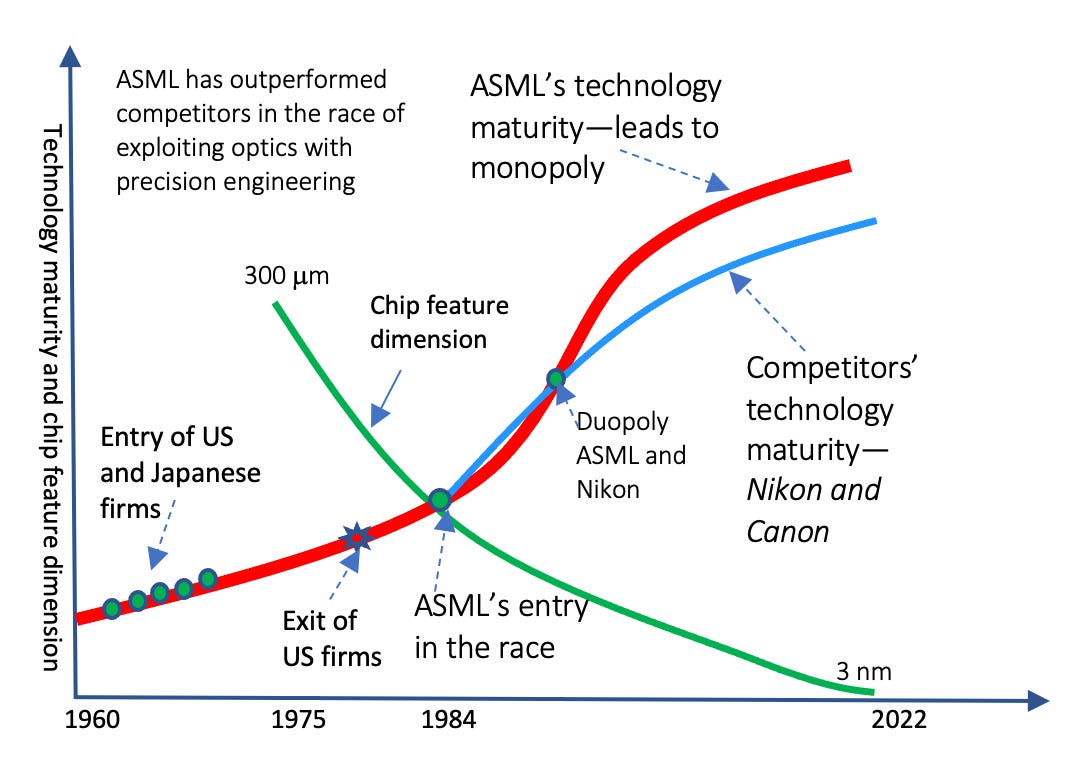
In deeptech, the endgame is not necessarily market share, as much at it is to become the standard others build on. ASML built a monopoly that has become increasingly valued as the market built on top of their unique product specs via their chip foundry clients. Cisco did not win networking by selling the most boxes, it won by becoming the architecture. ARM did not win silicon by manufacturing chips, it won by becoming the instruction set. This month, across air defence, space communications, quantum, and secure computing, we watched our portfolio companies take deliberate steps down that same path.
Space Communications: Proving the Standard Works
With satellites in orbit expected to keep multiplying, radio spectrum is saturating. Laser communication is the way forward, but only if ground and space segments can interoperate on common standards. Whoever proves interoperability first becomes the infrastructure everyone deploys against.
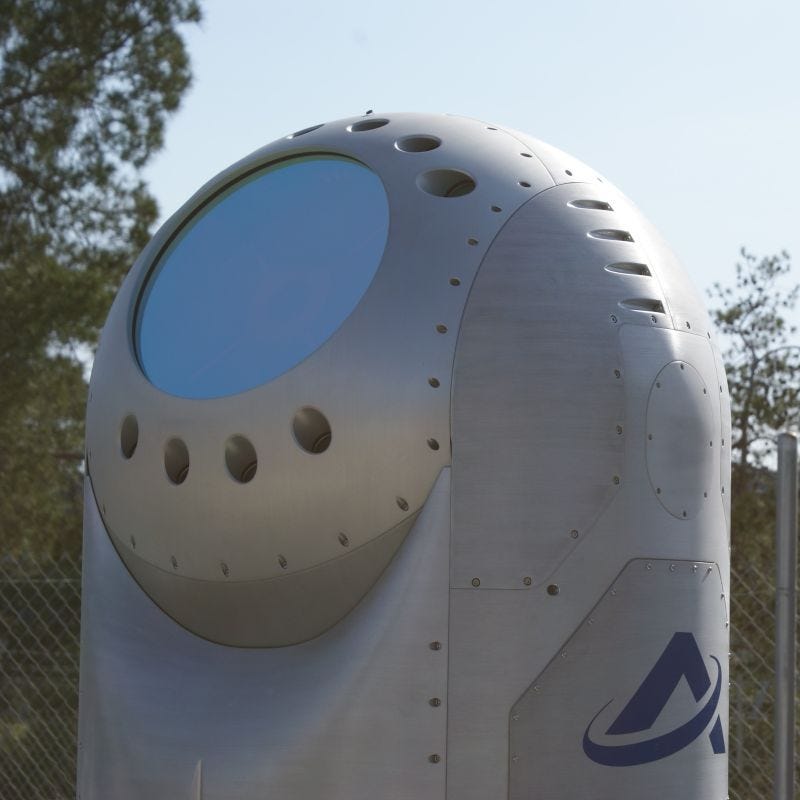
Portfolio Zoom: Archangel Lightworks successfully demonstrated data transfer between TERRA-M, their deployable Optical Ground Station, and a satellite in Low Earth Orbit. Data was securely and rapidly transferred over a multi-day field trial in the Mediterranean, repeated across multiple passes to prove reliability. Critically, the trials used the U.S. Space Development Agency laser communication standard. That is what interoperability looks like in practice.
Space Minister Liz Lloyd said: “Archangel Lightworks is a prime example of British innovation leading the world in next-generation space technology. The successful trials of the TERRA-M show the UK is at the forefront of laser communications, developing the kind of cutting-edge products that will underpin the future of global connectivity.”
The team also presented their TERRA-M test campaign at ESA’s Scylight 2026 conference in Tenerife, and is hiring across five engineering roles as they scale post-Series A.
Quantum: The Networking Layer Across All Modalities
The quantum industry is converging on a consensus: no single QPU will get to utility scale alone. The value is shifting to whoever connects them. That layer, like TCP/IP before it, will be built once and used by everyone.
Portfolio Zoom: Nu Quantum announced a partnership with Atom Computing, bringing together Atom’s leading neutral-atom quantum computers and Nu Quantum’s quantum networking technology to explore modular approaches to neutral-atom quantum computing. Carmen said: “The future of quantum computing depends on distributed architectures capable of scaling beyond single QPUs to deliver real-world utility and meaningful commercial impact.”
This matters for the standard-setting thesis: Nu Quantum’s networking already spans trapped ion, neutral atom, and ambitions toward solid-state qubits. They are positioning as the connective layer regardless of which hardware modality wins.
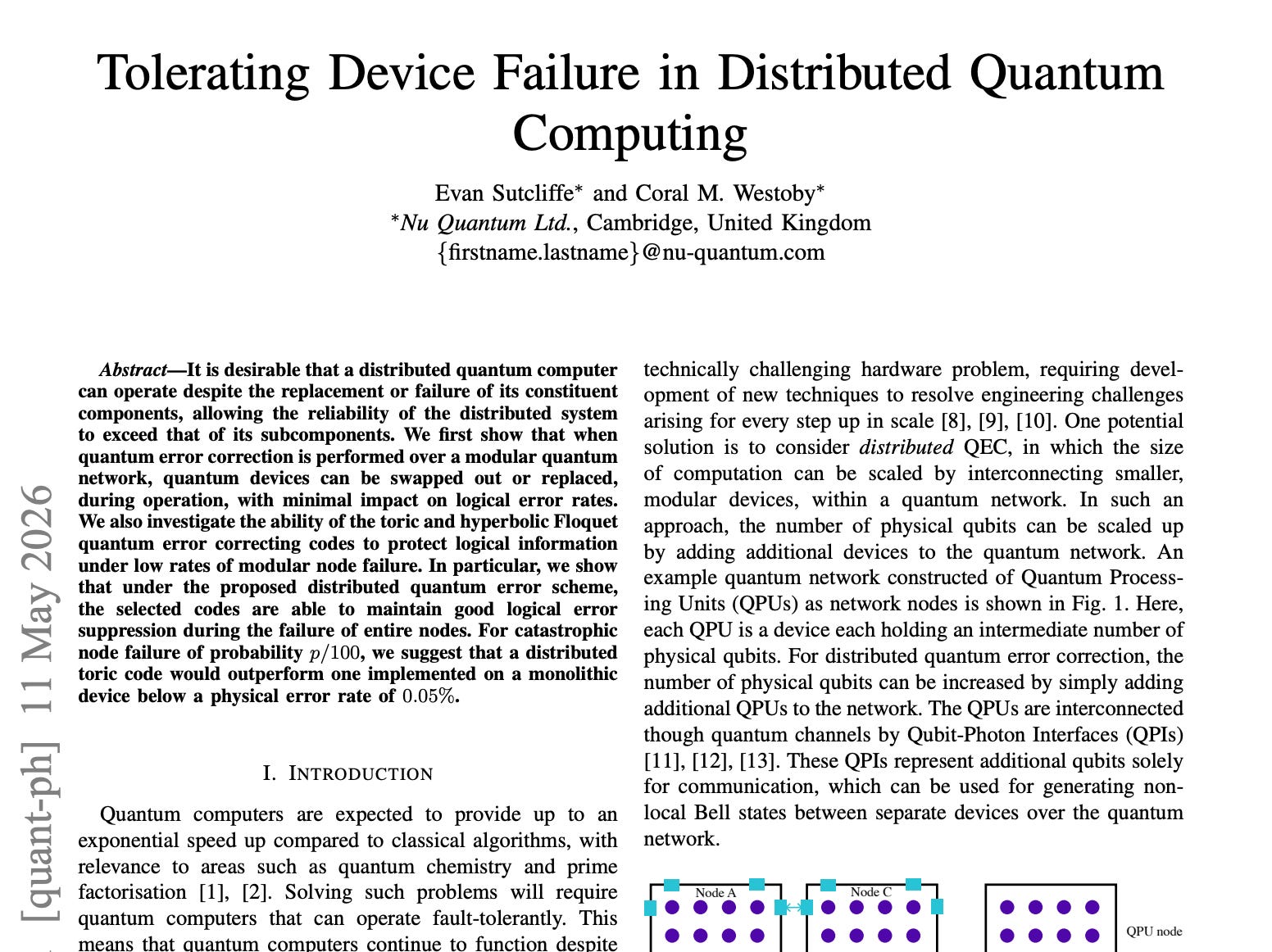
Their team also published new research demonstrating that distributed quantum computing systems can tolerate the failure of individual QPUs, with a distributed error correction scheme up to 6x more efficient than previously identified approaches. Sir Peter Knight, Chair of the UK National Quantum Technology Programme Strategic Advisory Board, said: “Nu Quantum has now demonstrated an important advance in linking together quantum processors to deliver resilience against sub-component failure, a major step towards fault tolerant distributed quantum computing.”
Carmen held a fireside chat with The Economist’s Jason Palmer at Commercialising Quantum Global 2026 in London, and will be speaking at Sifted Summit in September.
Haiqu, meanwhile, is doing for quantum software what Nu Quantum is doing for quantum hardware: becoming the layer everyone runs through. They launched an Academic Program making HaiquOS free for academic labs, alongside their Enterprise Program. Their partner Quanscient closed a 10M EUR Series A, and their joint work running nonlinear fluid dynamics on IBM hardware was covered by AZoQuantum: Haiqu’s middleware compressed circuit depth by 3x and made a 15-step Navier-Stokes simulation executable on today’s noisy hardware. As Quanscient’s Chief Scientist put it: “When you combine a highly streamlined algorithm with hardware-aware middleware, you can already today solve a realistic nonlinear fluid flow problem with an embedded obstacle on noisy quantum hardware.”
Air Defence: BLAZE Becomes the Interceptor Layer
Counter-drone defence is consolidating from individual point solutions into networked, layered architectures. The companies that win will not be the ones with the best single system, but the ones whose system every other player must integrate with.
Portfolio Zoom: Origin Robotics had an extraordinary month. France selected BLAZE to protect its forces, following a rigorous multi-month competitive evaluation run by the French Defence Procurement Agency (DGA) under a tasking from the Future Combat Command, where BLAZE was tested against competing systems. France becomes the fourth European operator after Latvia, Belgium, and Estonia. Training starts immediately, with first units delivered within weeks.
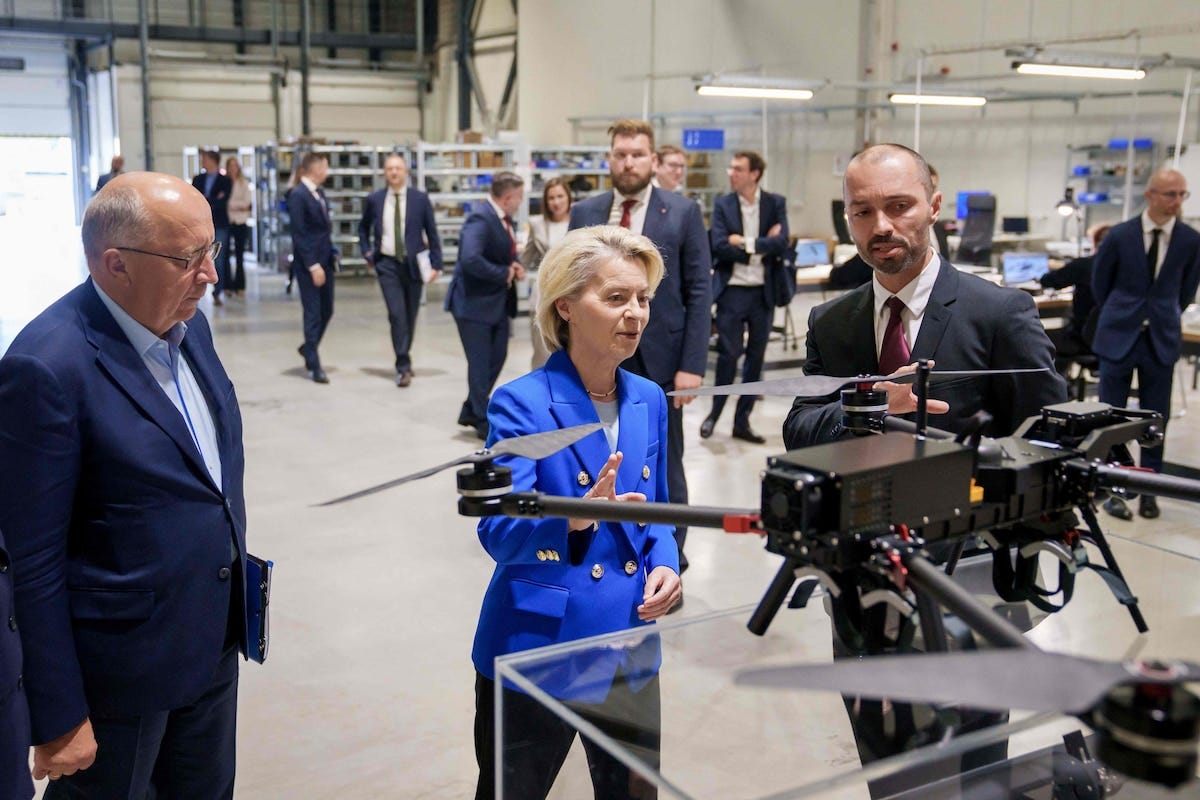
At Eurosatory, Origin signed two further MoUs: one with Alpine Eagle to integrate BLAZE into their Sentinel architecture, and one with EM&E Group to join capabilities on ODIN 6x6, a mobile integrated counter-UAS system. In their words: “Modern drone defence requires more than individual systems. It requires early detection, a shared operational picture, faster decision-making, and the ability to coordinate the right response across multiple layers of defence.”
And here is the standard-setting move: on 9-10 June, Latvia’s Autonomous Systems Competence Centre and Origin hosted the first ever BLAZE User Club meeting, bringing together user nations and observer countries to exchange operational feedback and shape the development roadmap. As Origin put it: “BLAZE is no longer just a system delivered to individual customers. It is becoming an international capability developed together with its users.”
During Drone Summit 2026 in Latvia, BLAZE was also demonstrated in a live intercept with a live munition, flown autonomously and executed by Latvian Air Force servicemen. “This is what operational readiness looks like.”
When Policy Writes You In
The strongest form of standard-setting is when governments write your technology into national strategy. This month it happened three times across our portfolio.
Portfolio Zoom: Hop Aero came out of stealth joining Y Combinator and announcing a US Air Force contract for their hyprsonic cargo delivery systems.
This video explains their unique infrastructure play in critical mission transportation:
SCI Semiconductor received an even more direct endorsement. At Cybersummit 2026, Baroness Liz Lloyd, Minister for Digital Economy, described CHERI as the “magic” chip to resolve many cybersecurity exploits, and pointed to the recent large government investments to help deploy CHERI technology. When a minister names your architecture as the fix, you move beyond being a mere vendor and you become the standard.
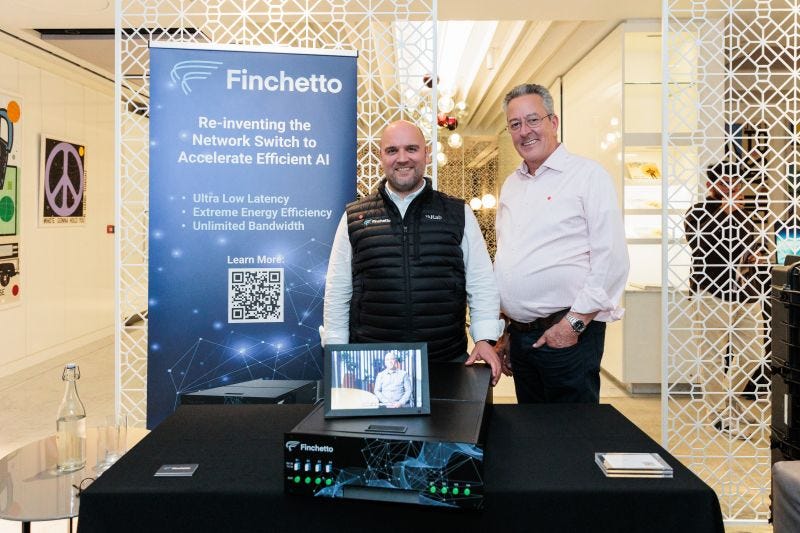
The UK AI Hardware Plan named photonics technologies a sovereign strategic priority and established the Scaling Inference Lab, a national facility for testing and validating new AI compute systems at scale. This is precisely what Finchetto’s CEO Mark Rushworth asked for publicly at Cambridge Tech Week last September, when Lord Ranger asked him what government could do for early-stage UK hardware companies. In Mark’s words: “For a UK hardware company, that means a credible path from development to deployment that didn’t exist before this week.” Mark, who sits on the UK Government’s Optical Communications and Photonics Expert Working Group, will also be speaking at CWTEC 2026 in London on 8 July on thin-film lithium niobate, the material rewriting the rules of high-speed datacoms. And it was great to have Finchetto demo their fully optical network switch at our own Deep Tech Showcase in London.
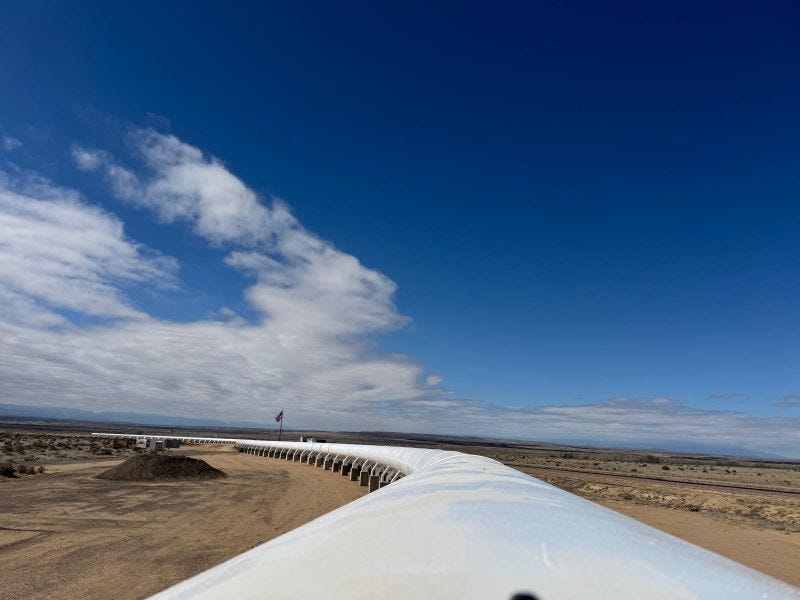
And across the Atlantic, the US Federal Administration introduced the first ever grant program dedicated to advancing hyperloop technology, under the CRISI, Federal Railroad Administration, and Department of Transportation initiative. Swisspod submitted their proposal, and they are arguably the reason the category exists: they operate the largest hyperloop infrastructure of its kind in Colorado. In their words: “This is more than just funding, it’s recognition that a new era of transportation innovation has begun.”
Swisspod also unveiled AERYS 2: nearly twice as long and twice as heavy as AERYS 1, engineered for higher speeds, 100% contactless with a new guideway and levitation system, and featuring a dedicated passenger seat for the first time. Their patented supersonic electromagnetic propulsion work was also officially recognised with a USPTO-issued patent, and CEO Denis Tudor was nominated as an American Swiss Young Leader of 2026 by the American Swiss Foundation.